
William Conlon: Paintings 1969–1981
Museum of Art, Carnegie Institute
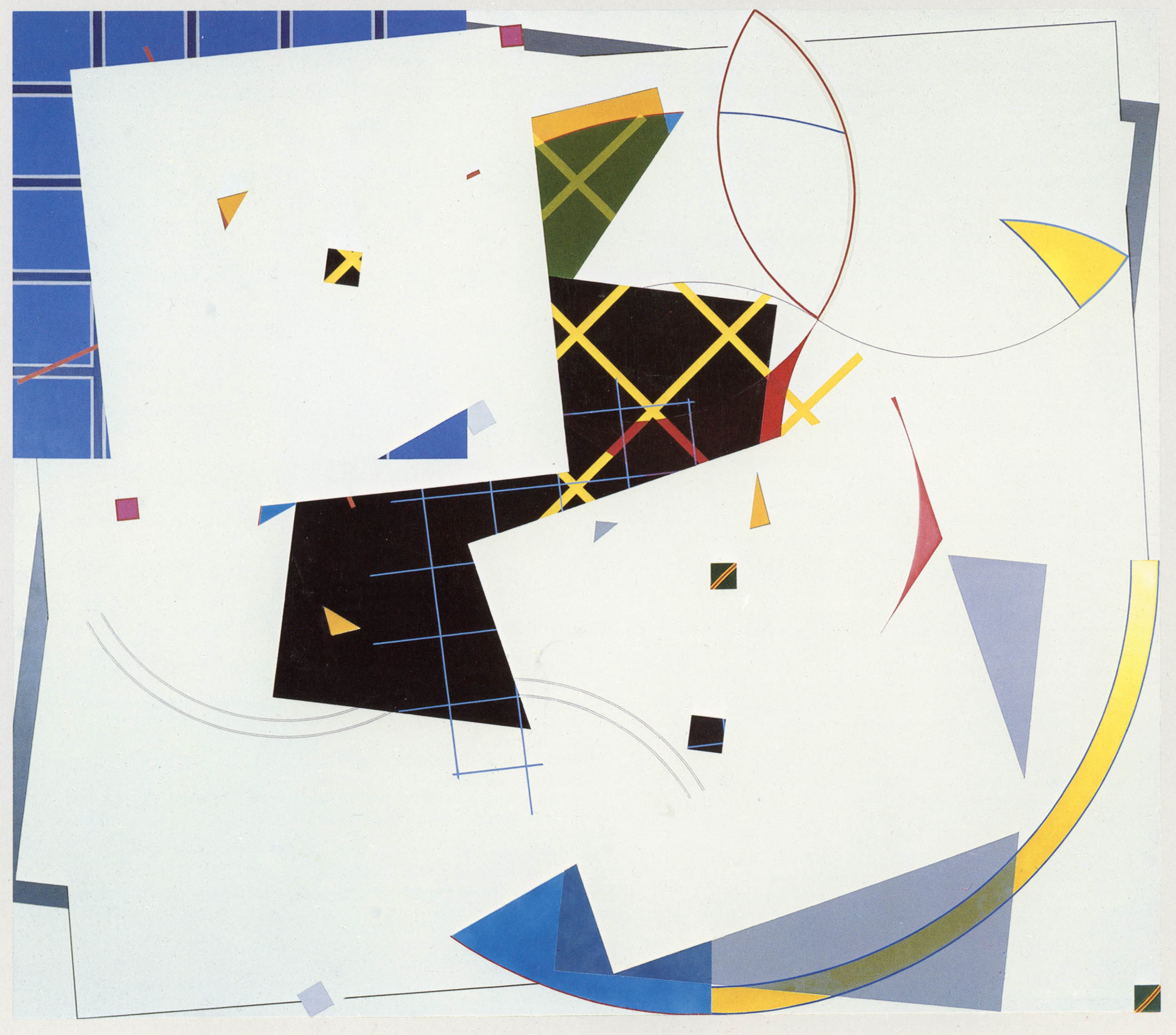
Cover: Broome Street Boogie, 1977-1978; acrylic on canvas; 53″ x 66″ (134.6 x 167.6 cm.)
Foreword
William Conlon’s paintings of the past dozen years are evidence of a special aesthetic intelligence, an optical acuity in search of visual order. In seeking this order, the artist has, within the rich tradition of twentieth century geometric abstraction, forged a highly personal vocabulary of form and color. Each painting is a crystallization of a discrete moment of perception secured in the course of exploring visible and invisible experience. Conlon’s ordered work sets extremely high standards of universal lucidity, while also being clearly informed by the vigorous presence of an individual artistic personality. It is this combination of the universal and the personal, together engaged by Conlon in the search for rational visual expression, that results in paintings of uncommon force and conviction.
We are indebted to Gene Baro, Adjunct Curator of Contemporary Art, for having organized the exhibition that this catalogue documents and for having contributed the insightful essay that follows. In the project’s organization he was efficiently assisted by Ann Scully, Exhibitions Coordinator. Dolores Kacsuta ably designed and saw this publication through production at Geyer Printing Company, Inc., Pittsburgh. Peter Stevens, William Conlon’s studio assistant and an accomplished painter himself, was exceptionally helpful. Special thanks are due to Andre Emmerich and Nathan Kolodner of Andre Emmerich Gallery Inc., New York, for their cooperation and interest in this project.
We are particularly grateful to the lenders to the exhibition William Conlon: Paintings 1969-1981: Albright-Knox Art Gallery, Buffalo, New York; American Telephone and Telegraph Company; Andre Emmerich Gallery, New York; William Conlon; Everson Museum of Art, Syracuse, New York; Grand Rapids Art Museum, Michigan; Paul and Camille Oliver-Hoffman; Dean and Mrs. Gerald McCue; Everson Museum, Syracuse, New York; and an anonymous private collector.
We thank the Pennsylvania Council on the Arts and the Howard Heinz Endowment for the support of the Museum of Art’s exhibition program that made the exhibition and catalogue possible.
William Conlon is a friend and a professional in all matters. We have been fortunate to be able to work closely with him on every aspect of this undertaking. It is with distinct pleasure that we salute his accomplishment.
Introduction
From his art student days, first at the School of Visual Arts in New York, then at Yale University’s School of Art and Architecture, William Conlon has been preoccupied with the character of abstract painting and with the search for its proper subject matter. Particularly at Yale, lively in the mid-1960s, he was exposed to all the intellectual art currents available from New York. Not much was missed in those days by a powerful studio department hospitable to a variety of critical and artistic opinions. At one time or another Conlon worked or studied with Al Held, Jack Tworkov, Robert Morris, and Frank Stella. He was familiar with the development of American abstract art from its beginnings and aware of the critical dictums of Clement Greenberg’s followers that seemed systematically to be narrowing the possibilities for abstraction.
The Abstract Expressionists had given currency to the notion that the artist’s activity—the act of painting—was the true subject matter of art. The risks the artist took, the choices made, were moral choices. Alas, these noble attitudes released every dauber from restraint and encouraged heroic claims to be made for personal ineptitude. In reaction, many artists tried to get themselves out of their paintings. Precision and impersonality of finish eradicated gesture and eliminated many of the ambitious who could pour and splash paint but who couldn’t control a brush or roller sufficiently to achieve an immaculate surface or a hard edge.
Another reaction came from so-called Pop Art. In its most significant phase this movement turned attention to the crucial issue of form. Johns and Oldenburg in their distinct ways raised the question of what we are seeing—a flag or a painting, a typewriter or a sculpture? Heroics were inappropriate to an inquiry that brought illusion and fantasy back to art, and usually by way of the commonplace, though exploitation or mockery of heroic scale became part of the visual vocabulary of the time.
Many abstract formalists declared for the primacy of color, allowing colors to interact lyrically with only moderate controls, and adjusting or editing the results. Others among them subjected color interaction to geometrical formats—squares, targets, stripes, chevrons, and other figures—for the orderliness and discipline these afforded and possibly to achieve subtler, clearer, or more intense results.
Conlon found it difficult to relate these and other contemporary critical and artistic developments to his own instincts and interests. It troubled him that so much emphasis was placed on what abstract painting was about philosophically or on how it should be managed technically to conform to the categorical imperatives of recent art history. He did not feel that his activity as painter was what abstraction was about. It wasn’t about flatness and fidelity to the rectilinearity of the painting support. It wasn’t about immaculacy. It wasn’t about color interaction or architectonics. All of these things, among many others belonging to painting, were devices an artist might use in pursuit of an objectively conceived subject matter, a communicable content.
Well, what of subject matter? For the abstract artist, it can be both a formidable and an elusive goal. The representational artist has his subject matter before him in the world of appearances. He may treat its data almost any way he likes—indicatively, fully, programmatically—so long as he asserts a system of resemblances that confirms our everyday habits of seeing. He may project a tree or a person as a single brushstroke or struggle to render each leaf or each face in thicket or crowd; or he may see as bizarre events the landscape of the tabletop or the landscapes of the world; or he may see them severely as so many interacting planes. He only simplifies or somewhat digresses from the ordinary vision of things.
The problem is more complex for the abstract or non-representational artist. Subject matter is something to be discovered in the labyrinths of perception. Not only what is seen but the nature and essence of vision is country he explores. For him, vision is not a series of observations or a continuum of effects, not a quality of things, but a web of processes integral to mature, sensual, intellectual, and emotional life. We are dealing with the big computer. In his art, he rediscovers and exploits these interpretive and integrating processes. Vision becomes perception; perception becomes insight that can be shared.
This is an ideal formulation. No one is more conscious of the pitfalls than Conlon. At the same time, it’s a personal matter. An artist brings a certain cast of mind and bias of eye to the skills he’s acquired, or perhaps he’s acquired his technical skills in order to give form to his visual convictions. The sooner he becomes himself the better. Conlon has worked brilliantly to make content intelligible and communicable in his paintings. His sense of the ongoing problem of subject matter has freed his imagination and his creative energies. His contribution, while related to the mainstream of modern abstraction, is also in the vital sense of focus independent of it.
Conlon has said that he did not begin to paint seriously until he left Yale. His art education stimulated him greatly but also defined for him what he did not want. In New York, without a suitable studio, he gave most of his time to drawing. These works, many of them little more than sketches or doodles, began to point the way for him to paintings that he could feel were securely his own.
This was a time for Conlon of “turning inward toward feeling, of turning away from Stella, Greenberg, and Michael Fried, from echoing the framing edge.” At last in a new and sufficient studio in Broome Street, he was free to attempt the large canvases he had had in mind, canvases that would overcome the cramped “wrong scale” of the drawings and provide the arm-sized gestures that had become important to him.
The first of these, Untitled (Alphabet), 1969, was already a breakthrough. Conlon was able to translate the drawing/doodling impulse to a 9′8″ x 12′ format. The subject matter was the tension between the spontaneous and the regular, between informality and formality, between the random mark and the ordered mark. A special interest for Conlon has its source in his drawings of the period, the physicality of the marks, their potential for suggesting movement and elaborating the interactive energies of the forms.
A Conlon painting can often be thought of as a kind of theater in which a drama of relationships unfolds. As with the painting under discussion, the events or narrative play out against or within a neutral or ambiguous space, in this instance against many others a white field. Conlon has said, “A white field is enigmatic. It has no perspectives, no depth. The white is more like a gravitational field. One mark could read as thirty feet deep, another read as on the surface.” Conlon’s forms then become the actors, the dancers, who are themselves the interacting forces that give substance to their spatial envelope.
There is nothing casual or unconsidered in Conlon’s visual choreographies. However free the results may seem, all depends upon a precise ordering of space. Conlon’s vision involves us with what is there and with what isn’t, with what might be there and with what is there by implication. For instance, Untitled (Shift to Left), 1970, is steadied by an implied “x” in the organization of its forms. White Dwarf, 1970, metaphor for an exploding star, deploys its forces outward from an empty center. And Blue Giant, 1970/71, develops the ideas of rotation and orbit, of defined courses, fixed yet moving. These organizational devices are far from traditional ideas of grid-supported composition. They have everything to do with Conlon’s refinement of eye; directly, perhaps, they are a consequence of the problems imposed by the white field, where, as Conlon has said, “everything becomes equal.”
Possibly also because of the equalizing function of the white field, paint handling and manipulation become critical to these paintings. The quality and character of the marks help them to assert a pace of their own. Color, density, texture are all elements in the substantial establishment of the forms. Paint handling gives a special dynamic to Conlon’s shapes, all calibrated to the particular painting’s dominant movements and interactive verve.
Overlapping and seeing through forms becomes important for Conlon with such paintings as Crossing Over, 1971, and Red Giant, 1971/72. The intention was to present simultaneously different viewing experiences. The interplay between gesture and geometry is one of psychic and emotional opposites. In these paintings, Conlon was not after balance. What he wanted was a change of focus on the part of the viewer, a shift in thinking or cognition.
With Untitled (Purple and Black are Coming Back), 1973, which Conlon has described as a transitional painting, he pushed expressionistic handling and geometric form to a new height of tension. The painting’s energies are formidable, as multiple overlapping spaces involve themselves with the picture plane. The layered space crowds the canvas with forces that seem about to break out of it, and yet the whole floats, held to a delicate suspension, a huge fish in a small tank.
Black Jack, 1973, is a less menacing variation of Purple and Black. Both paintings are transitional in the sense that they begin Conlon’s departure from an art oriented directly to the real world. With Einstein’s Waltz, 1974, Conlon’s overlapping planes become transparent or are implied. Sometimes the planes are adumbrated by coordinates. The pictorial dynamics are mainly internal and all the parts fully interdependent. Conlon has said, “If I have to move one thing I have to move everything.” Space is articulated in and through the various planes and by way of reference points. His aim has been, in his words, “a physics of vision.”
In such paintings as Fermi’s Temple, 1975, 20th-Century Limited, 1976, and Einstein’s Waltz II, 1976, Conlon pursued a radical simplification of means to achieve complex ends. The first of these paintings is the most severe and elegant, holding its floating planes in harmony through a system of reductive but utterly clear notation. In 20th-Century Limited, the overlapping planes extend beyond the pictorial space. Extension and enclosure are made aspects of the same system. As the painting’s planes go beyond the limits of the painting, so also does the space seem to be coming in upon itself.
Conlon has said that he chose his title because “Einstein used a train to explain relativity.” Einstein’s Waltz II offers a self-sustaining visual logic, in which four squares within the picture frame interact with two that float beyond the pictorial borders.
Broome Street Boogie, 1977/78, is predicated on the second of the Einstein paintings, but here the concern is more clearly with boundaries and edges, with the physical sensation of seeing and reacting to spaces. The viewer is invited to give in to the complexity of the painting without trying to solve it. In this work, Conlon used for the first time a black square centered. Normally the black square would be dominant, but Conlon has so adroitly managed his materials that the white negative squares read as positive. Far from being a game, the painting addresses the realities of perception through the ambiguities implicit in the mechanics of seeing, a primary means in human orientation.
The notion of the viewer recomposing the pictorial elements has strong appeal for Conlon. With Paradox Motel, 1978/79, and more pointedly with Haley’s Comet, 1979, he provided a number of options: the paintings need not be seen in only one way. In fact, Paradox Motel provides a kind of planar dialogue that prevents the establishment with the viewer of a single image. The painting is contemplative; it has considerable complexity and clear readability, but our inclinations are to go with it rather than to understand it, to partake of its unresolved shifts and combinations, difficult to fix as the dappling of sunlight on leaves and water. Haley’s Comet is a bit more energized, somewhat more committed to motion, but the viewer must bring his own spontaneity to the accord of the pictorial elements. The painting holds too many possibilities, too many internal logics, to serve a unified image.
It was perhaps inevitable that Conlon would paint an identical picture in two versions. “What is likeness?” Conlon seems to be asking. The Blues Brothers, Sam and Dave, 1979, painted in two panels, is like and not alike, identical in feature but different in character. Comparing the two parts, the viewer is drawn into the comedy of identity.
Red Shift II, 1978/80, brings us back to the story of the centered black square overlapped by two squares of white. But here a further complication has been introduced, a dot pattern interface of white on black, echoed elsewhere in reverse. The planes now have a pulsation, a syncopation, if you will, that raises and lowers the intensities of shapes within the organized whole, as our eyes travel over the surface and into depths implied.
With Sunset City, 1980, and Red Shift Journey, 1980, Conlon’s work attains a new density and complexity. These paintings have more the feeling of collage, of successive overlay, though the eye continues to move spatially through line and through dot patterns. Possibly the relationship these have to a grid support make these paintings appear more formal and more decorative than earlier works. Their load of data is so considerable as to make the possible combinations seem fugal.
Greater clarity (though not therefore simplicity) returns with Constructavision, 1980, and Columbus Circle, 1980, where overlapping squares, arcs, and implied circles play with and against a variety of patterns and motifs to give us an exquisitely controlled but liberated sense of space. The story that Conlon tells here and elsewhere is of that ambiguous borderline where seeing and feeling are one and of the pleasures and vagaries of the eye that shape the visible world but never fix it. The subject matter is change.
Plates
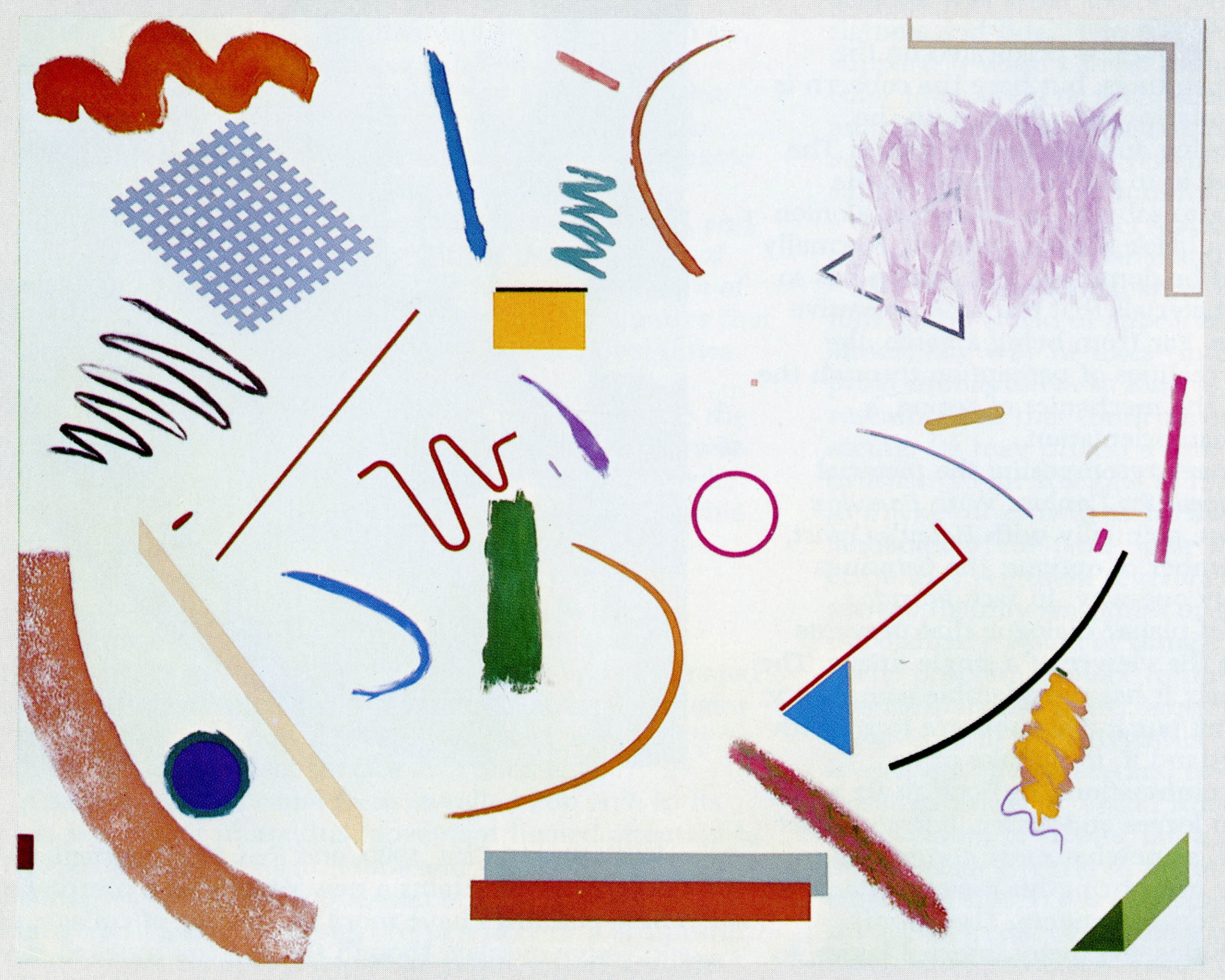
1 Alphabet, 1969
acrylic on canvas
116 x 144″ (294.6 x 365.7 cm)
Collection of the artist
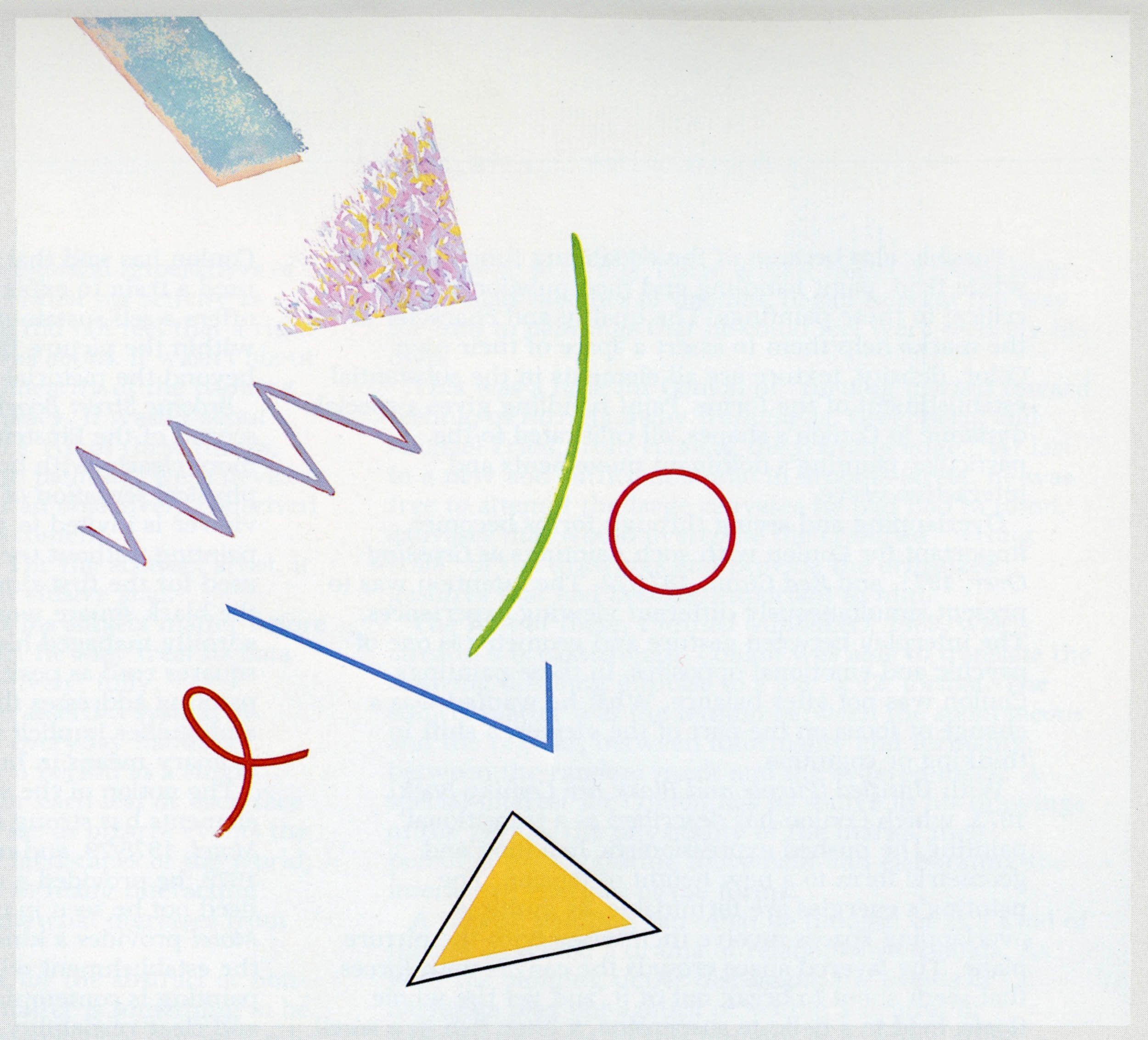
2 Untitled, 1970
acrylic on canvas
95½ x 104½″ (242.5 x 265.4 cm)
Collection of Everson Museum, Syracuse, New York · Gift of Mr. Arthur Morris
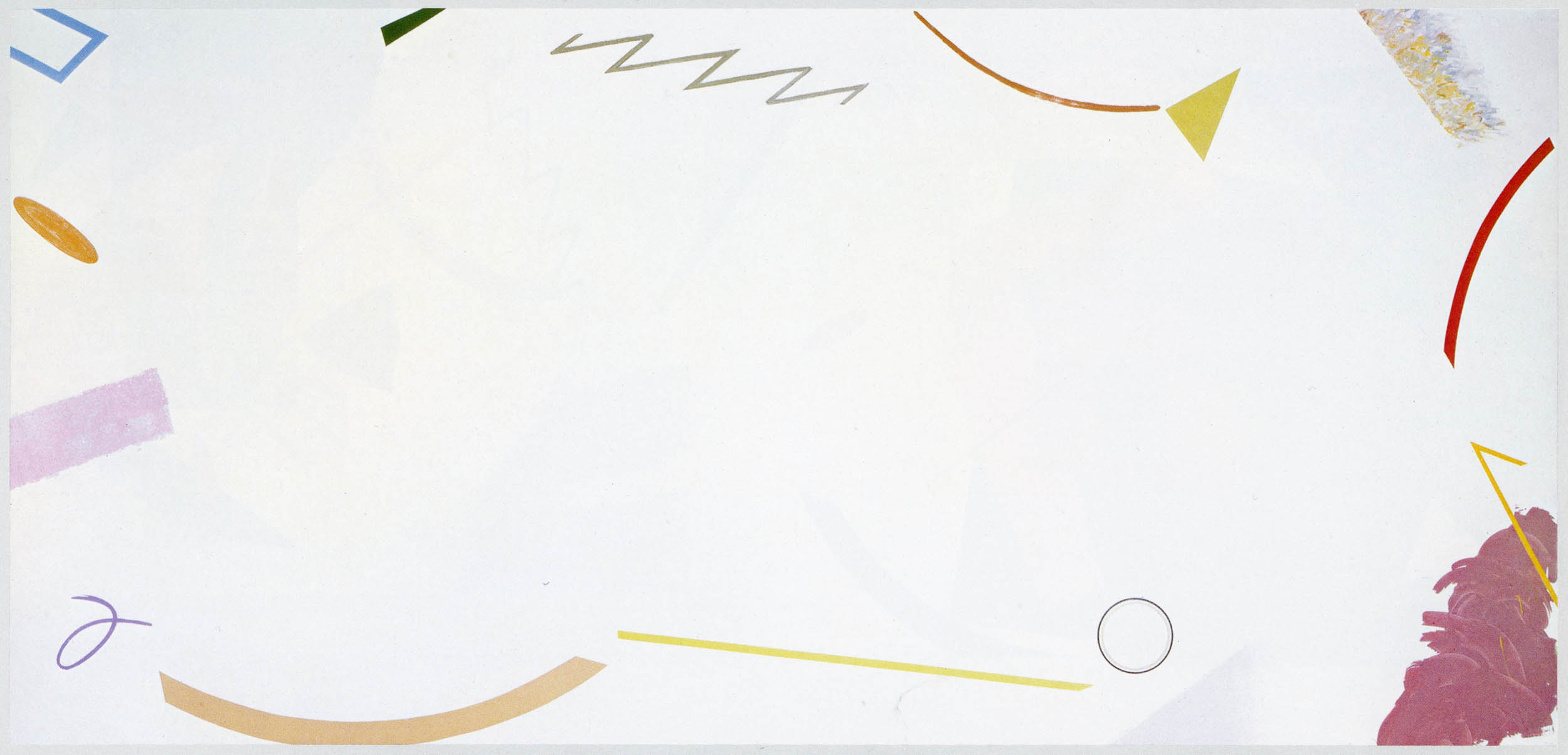
3 White Dwarf, 1970
acrylic on canvas
115½ x 240″ (293.3 x 609.6 cm)
Collection of the artist
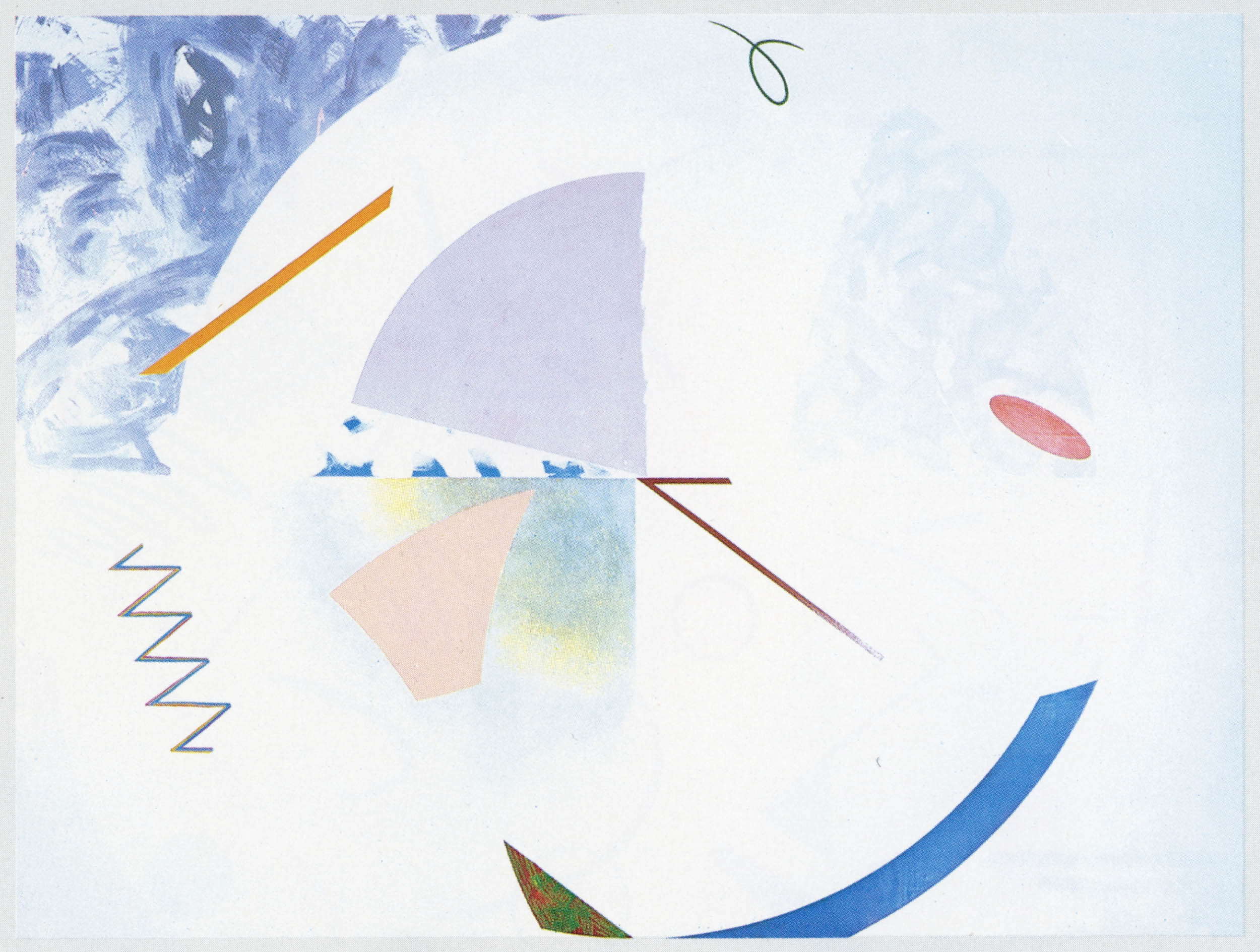
4 Blue Giant, 1970-1971
acrylic on canvas
144 x 192″ (365.7 x 487.6 cm)
Collection of the artist
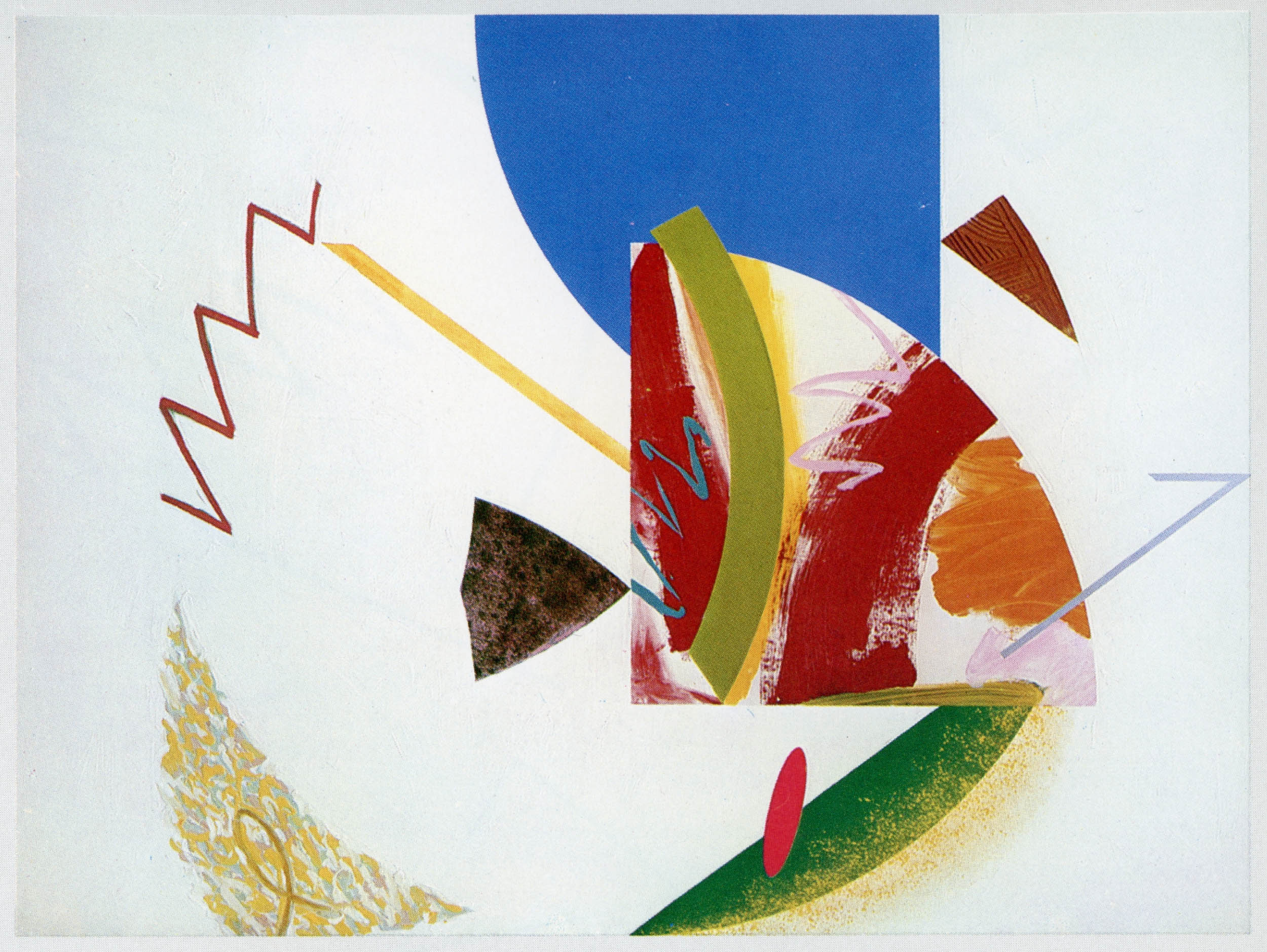
5 Crossing Over, 1971
acrylic on canvas
90 x 120″ (228.6 x 304.8 cm)
Collection of the artist
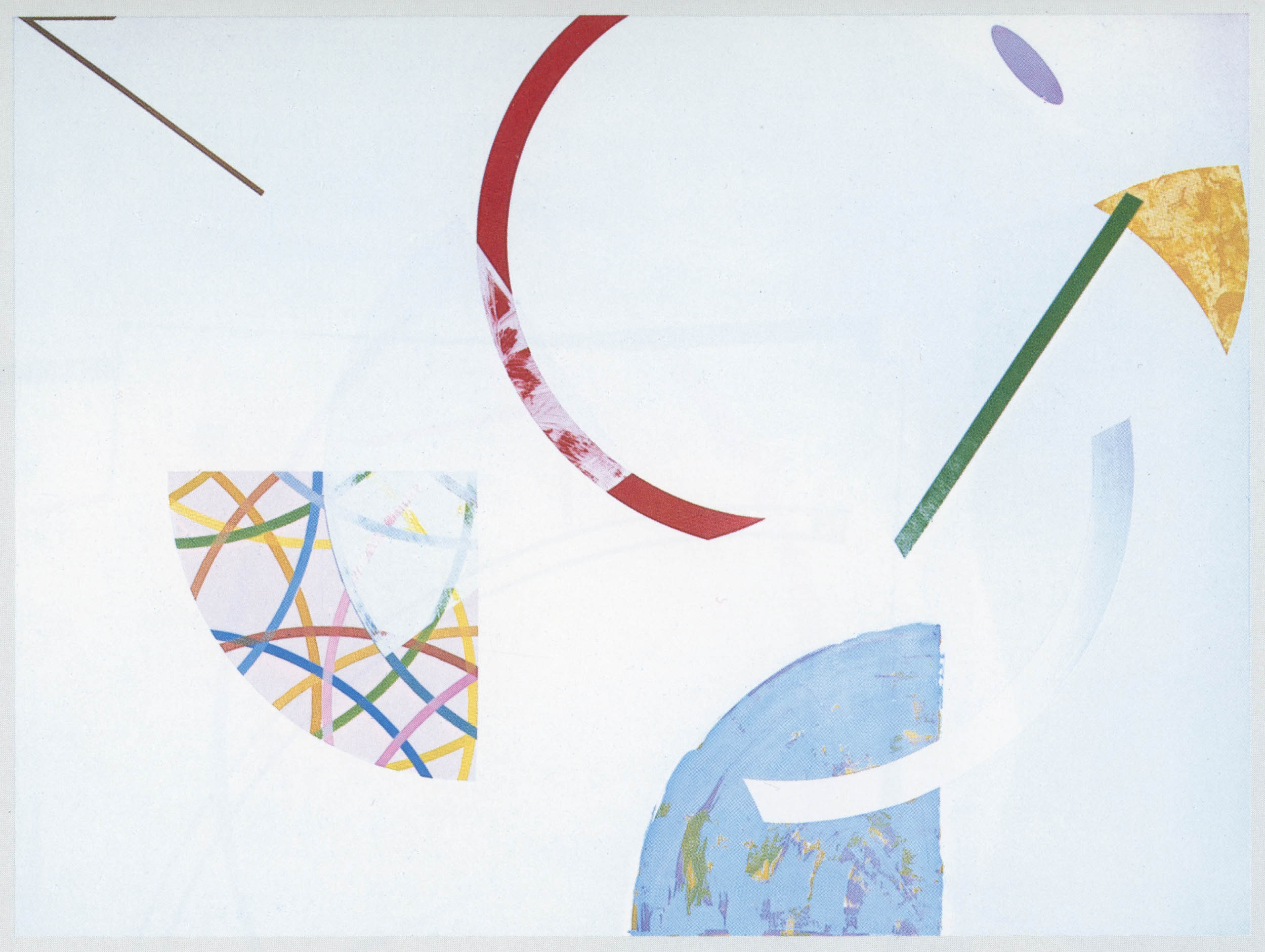
6 Red Giant, 1971-1972
acrylic on canvas
144 x 192″ (365.7 x 487.6 cm)
Collection of the artist
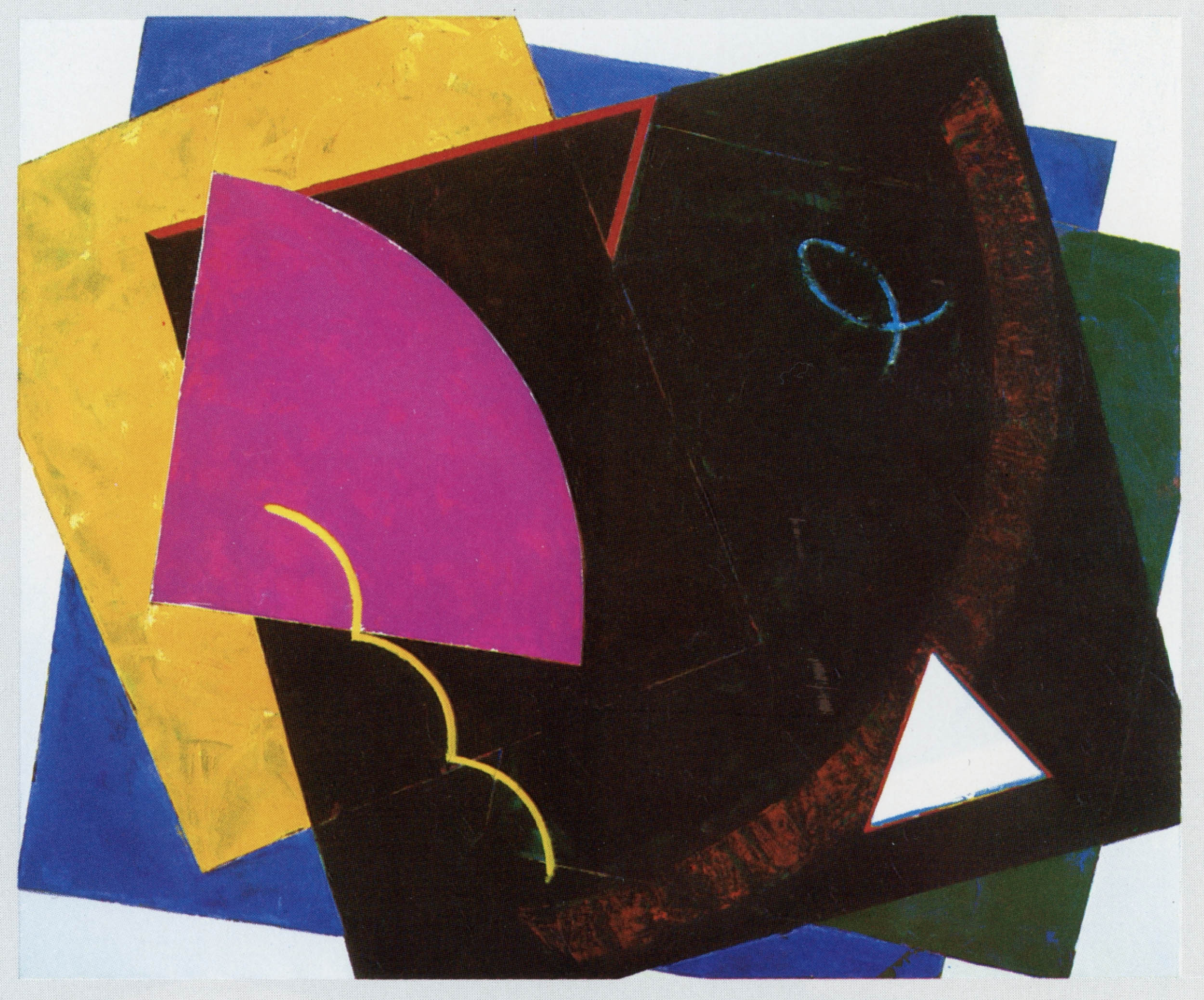
7 Purple and Black are Coming Back, 1973
acrylic on canvas
92 x 111″ (233.6 x 281.9 cm)
Collection of the artist
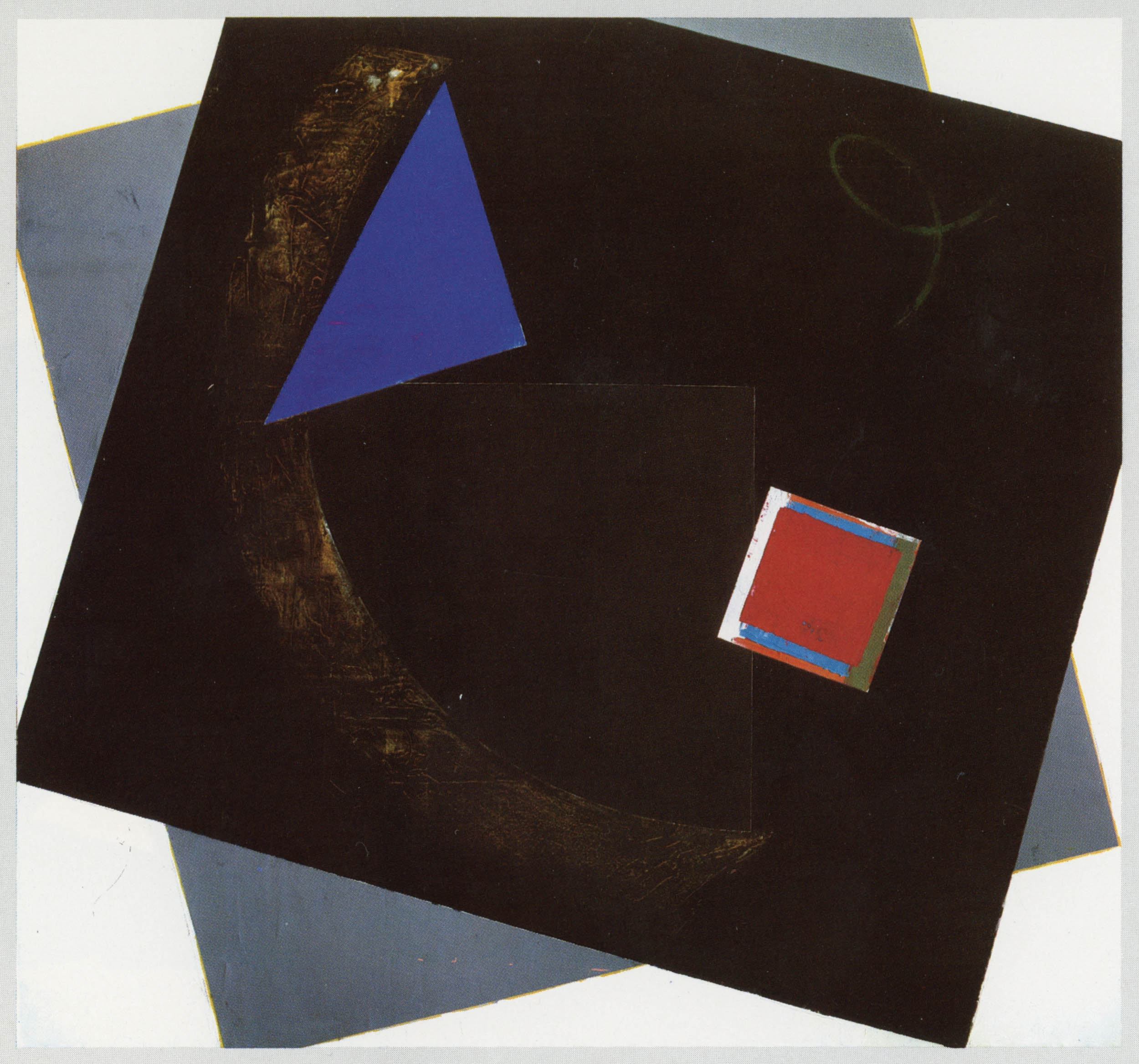
8 Black Jack, 1974
acrylic on canvas
96 x 96″ (243.8 x 243.8 cm)
Collection of the artist
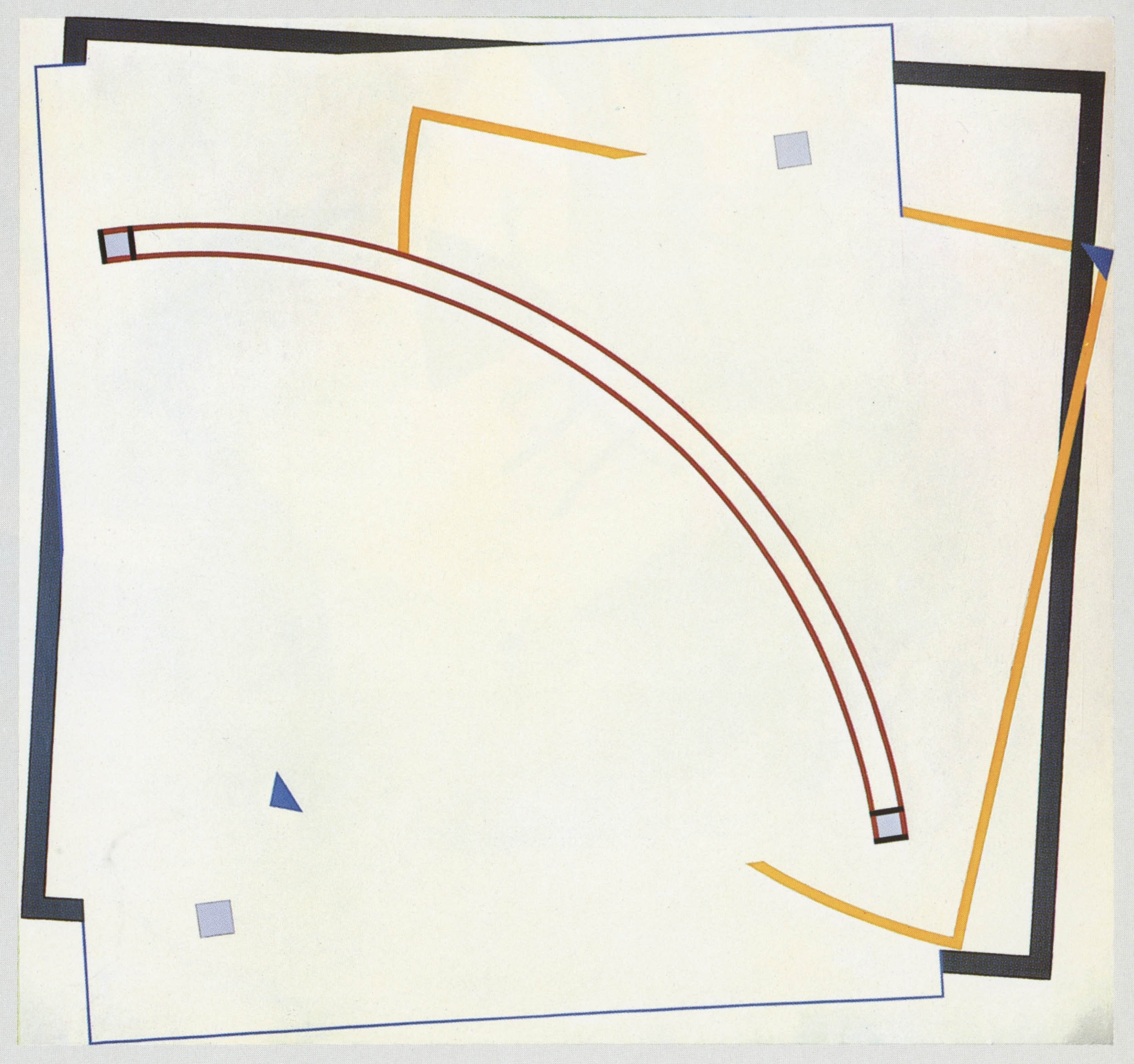
9 Einstein’s Waltz, 1974
acrylic on canvas
90 x 96″ (228.6 x 243.8 cm)
Collection of the artist
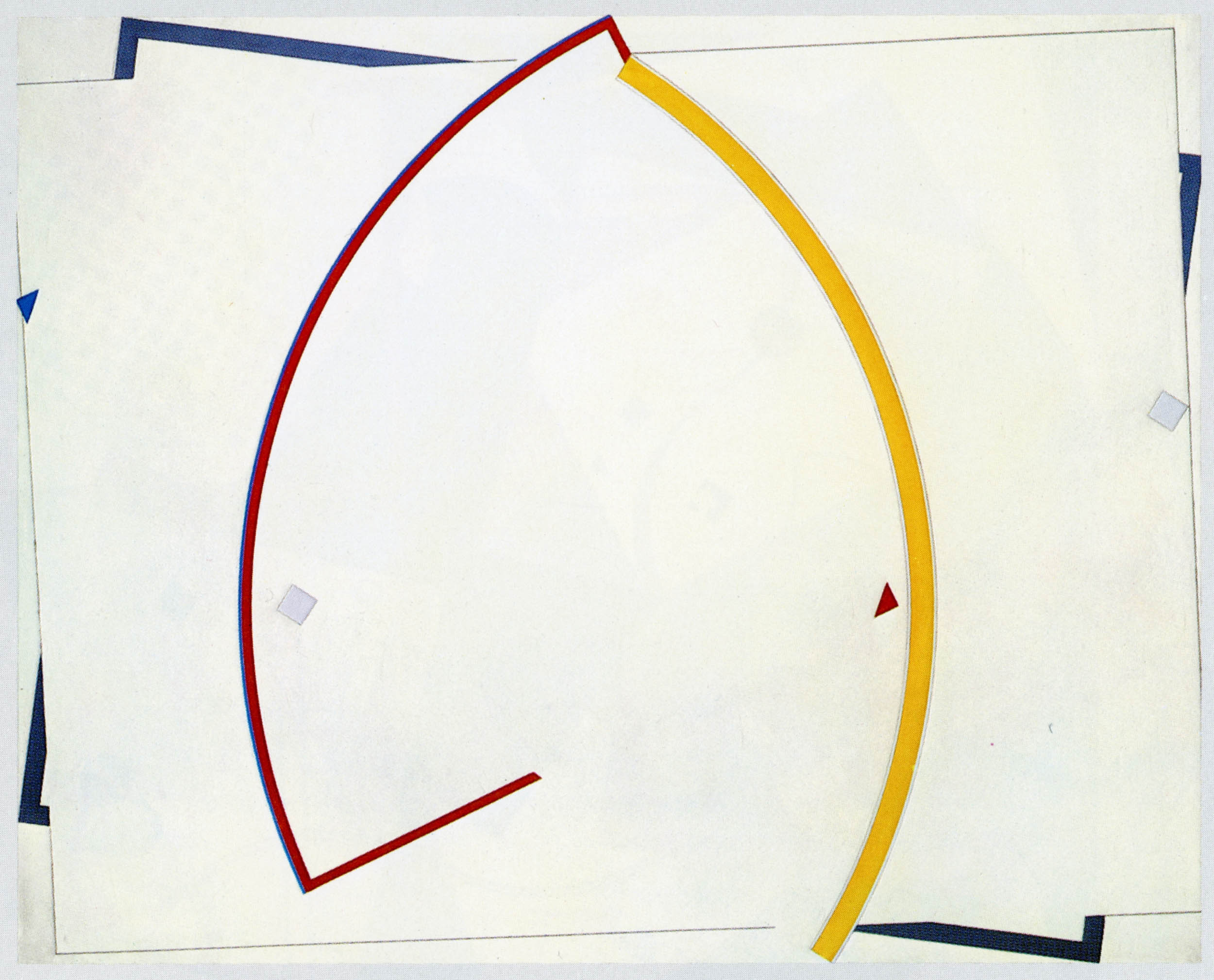
10 Fermi’s Temple, 1975
acrylic on canvas
72 x 80″ (182.8 x 203.2 cm)
Collection of the artist
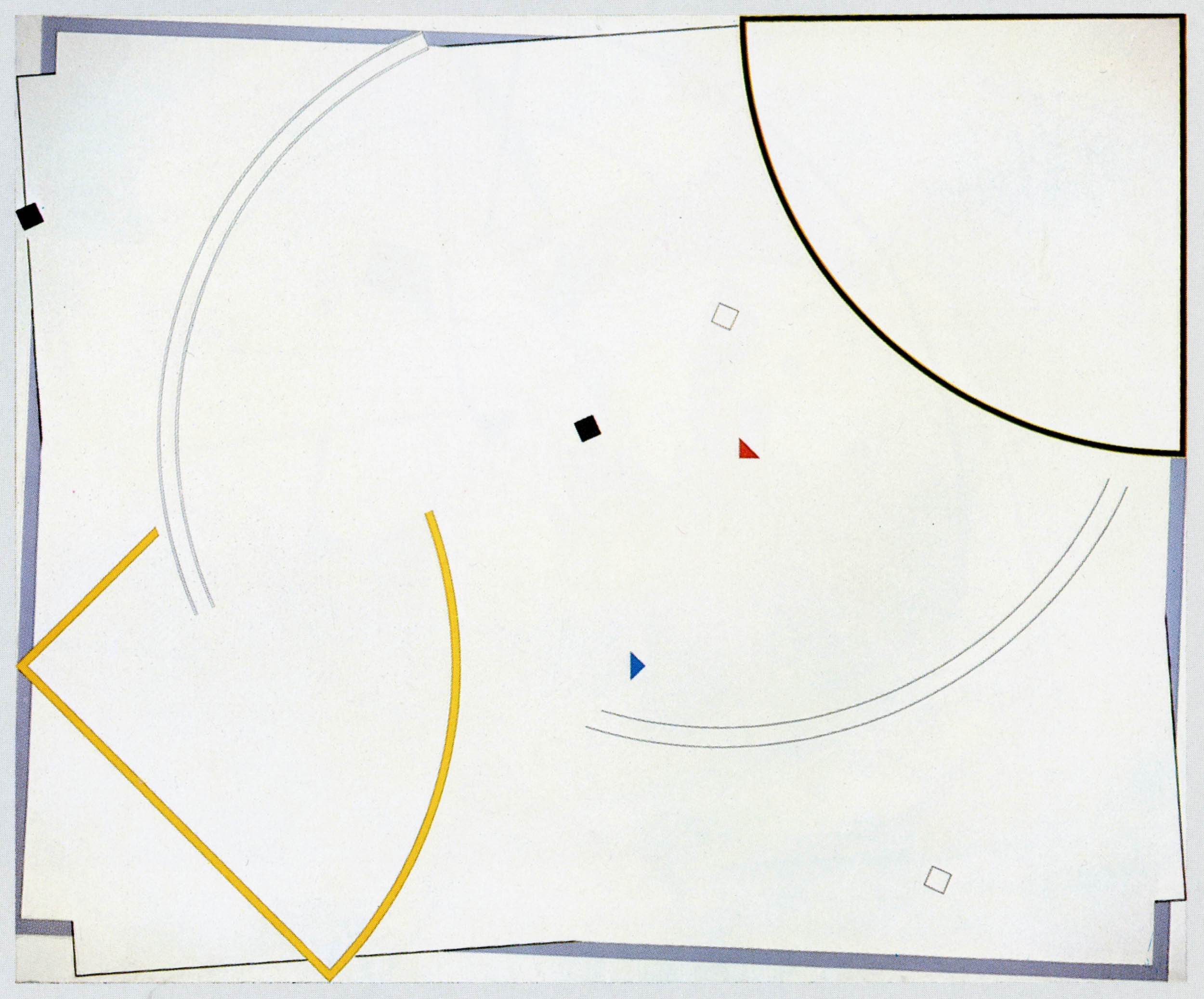
11 Einstein’s Waltz II, 1976
acrylic on canvas
92 x 111″ (233.6 x 281.9 cm)
Collection of the artist
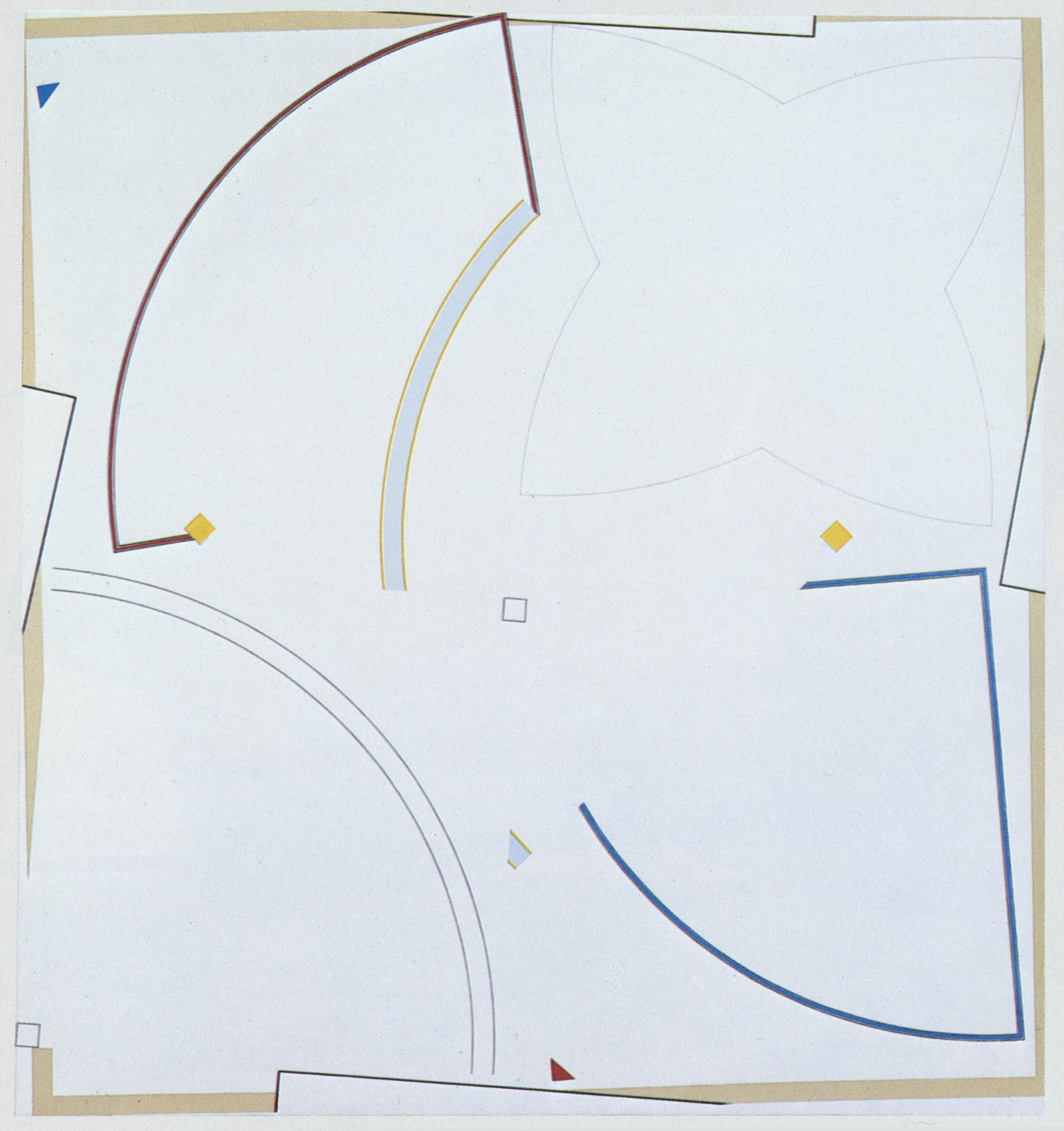
12 20th Century Limited, 1976
acrylic on canvas
84 x 78″ (213.3 x 198.1 cm)
Collection of Grand Rapids Art Museum
13 Broome Street Boogie, 1977-1978
acrylic on canvas
53 x 66″ (134.6 x 167.6 cm)
Collection of Dean and Mrs. Gerald M. McCue
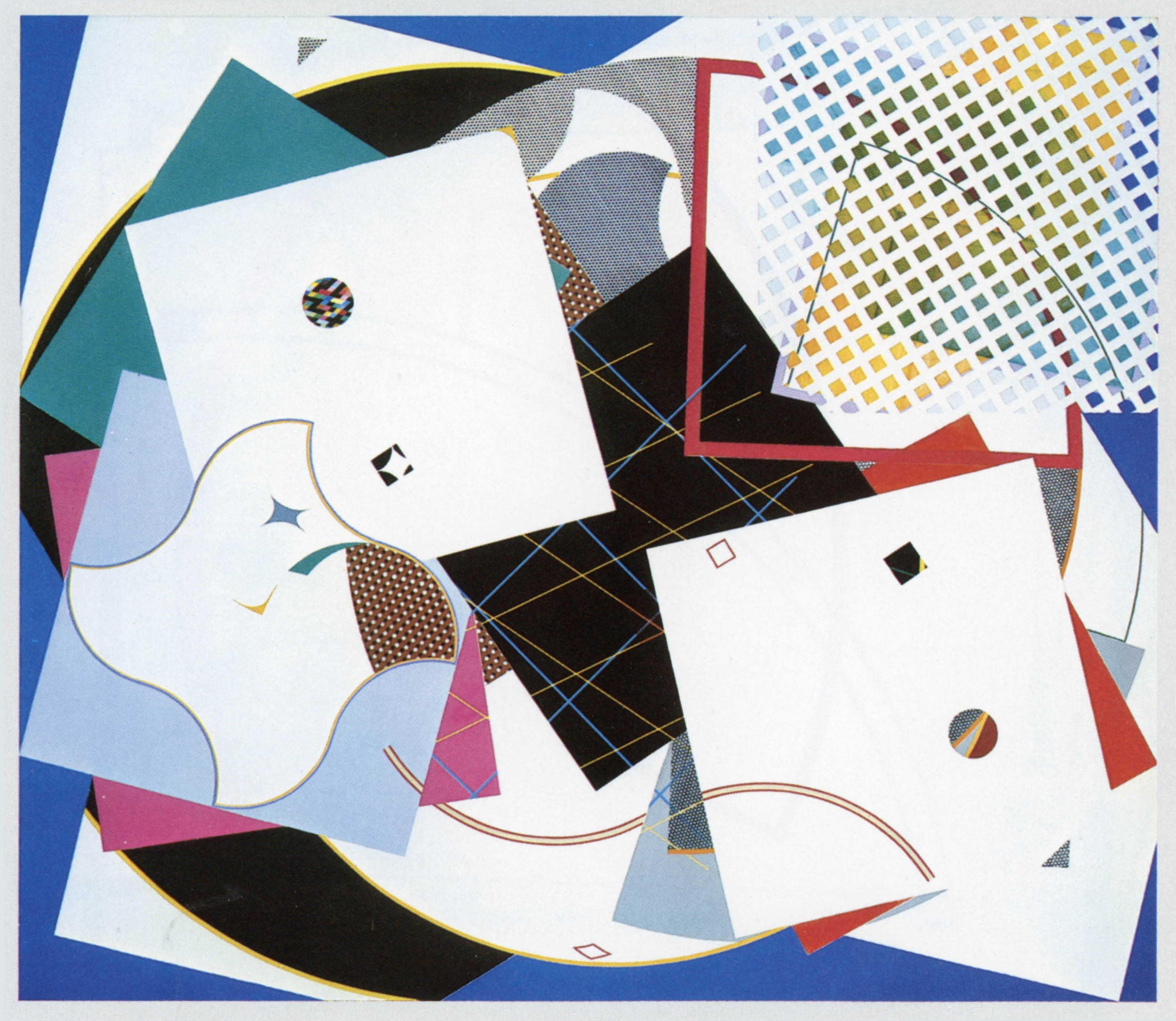
14 Paradox Motel, 1978-1979
acrylic on canvas
52 x 60″ (132 x 152.4 cm)
Private Collection
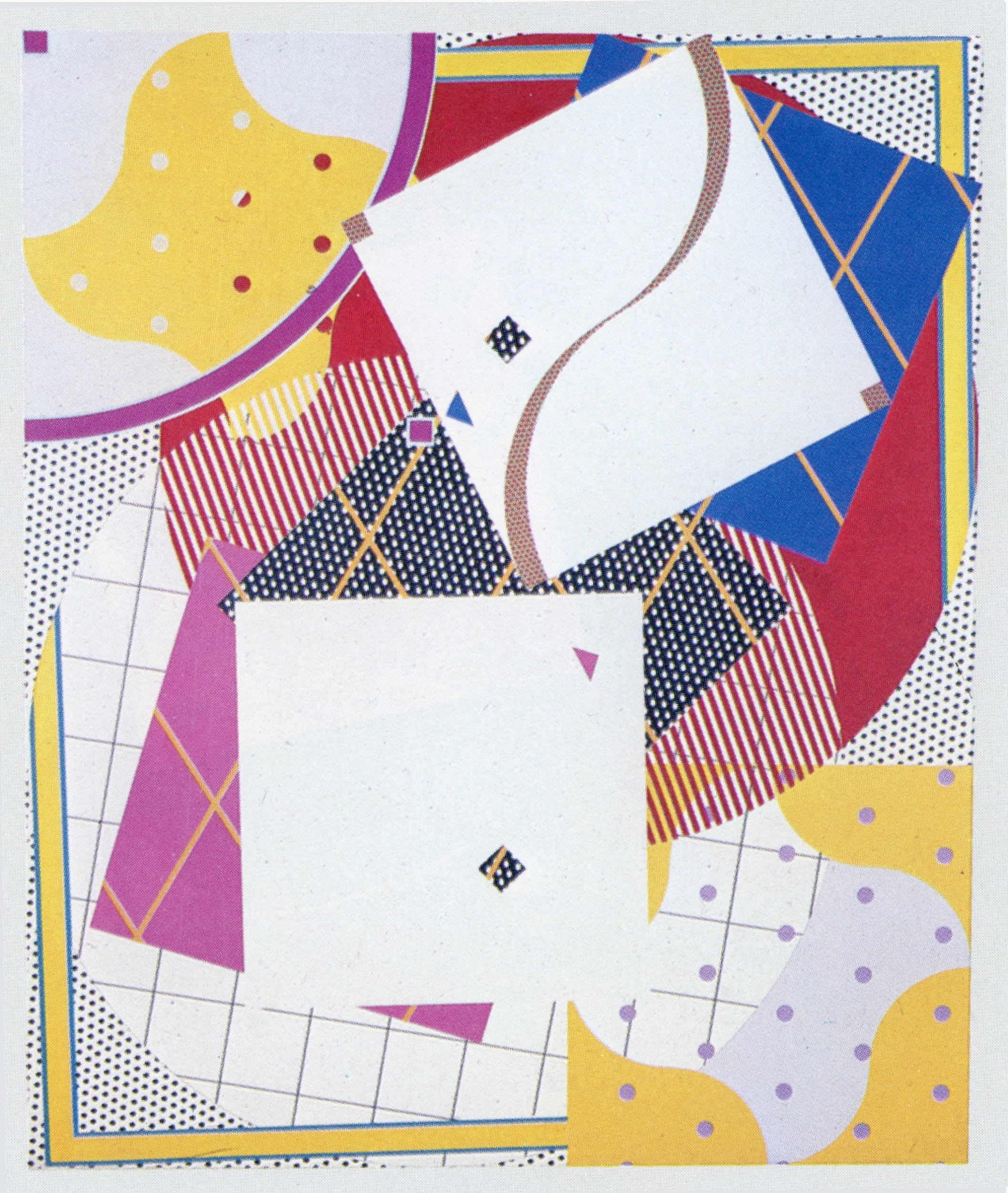
15 Red Shift II, 1978-1980
acrylic on canvas
50 x 42″ (127 x 106.6 cm)
Private collection
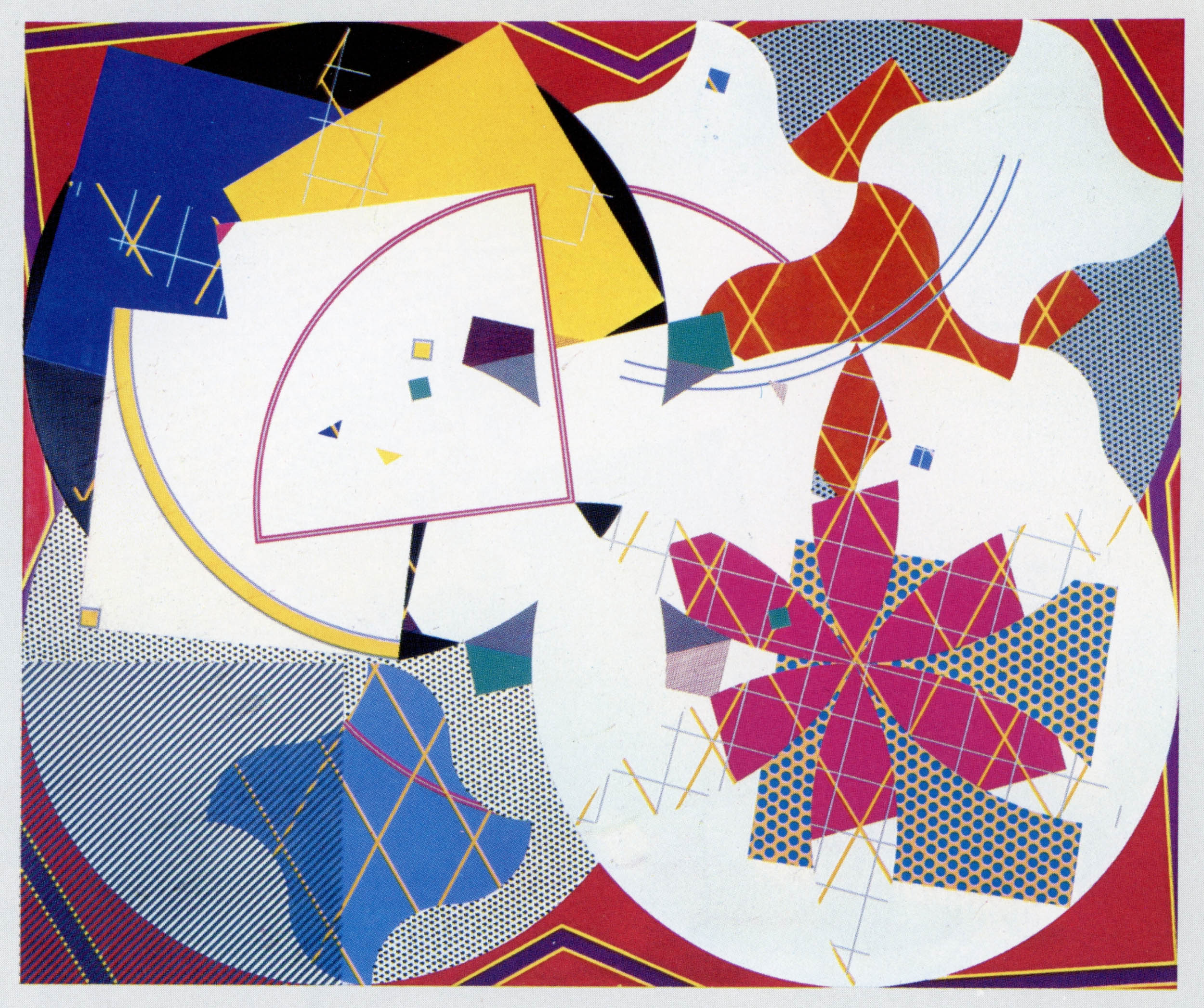
16 Haley’s Comet, 1979
acrylic on canvas
72 x 86″ (182.8 x 218.4 cm)
Collection of Paul and Camille Oliver-Hoffman
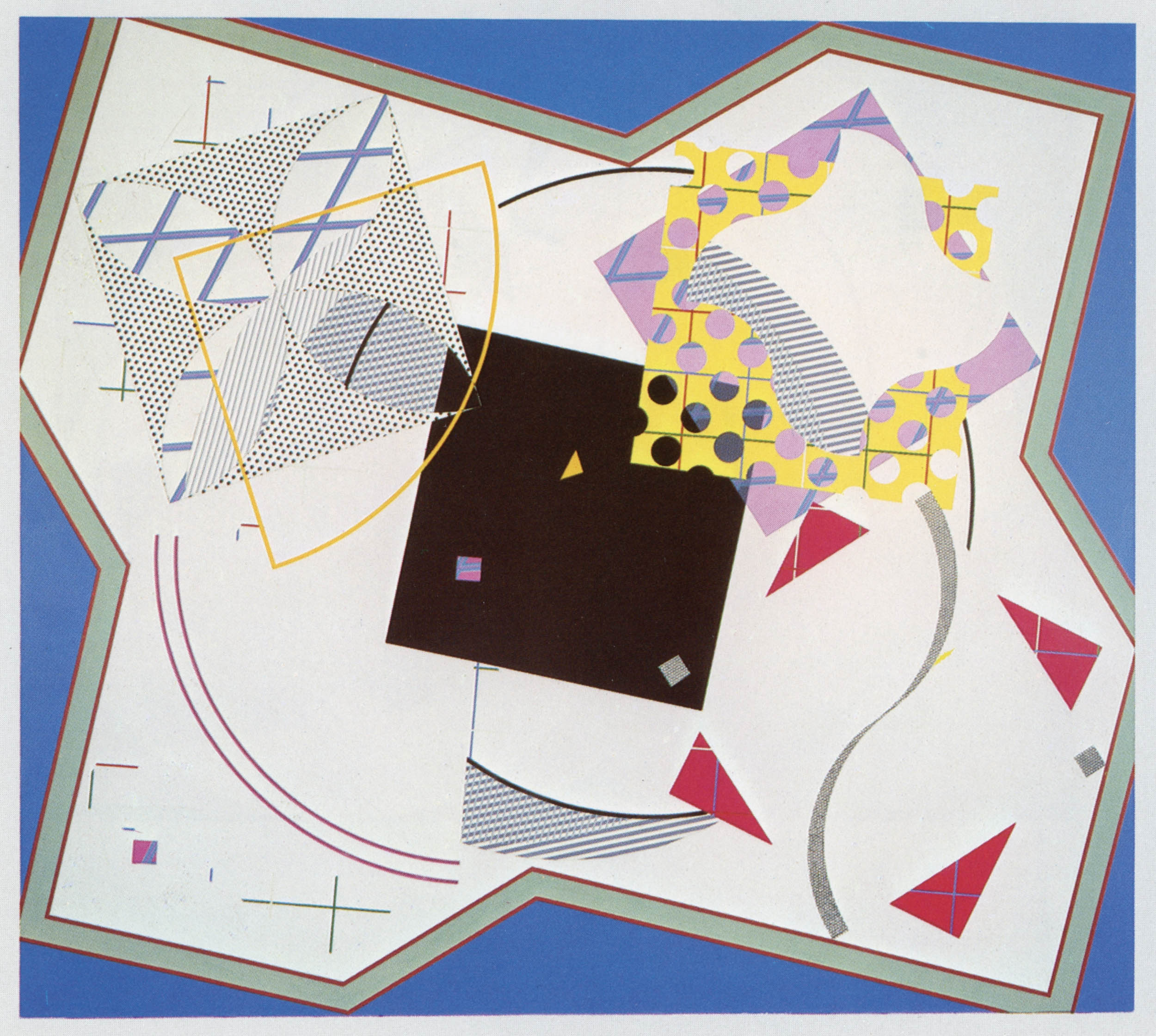
17 The Blues Brothers, Sam, 1979
acrylic on canvas
One of two panels 64 x 72″ (162.5 x 182.8 cm) each
Collection of American Telephone and Telegraph Company
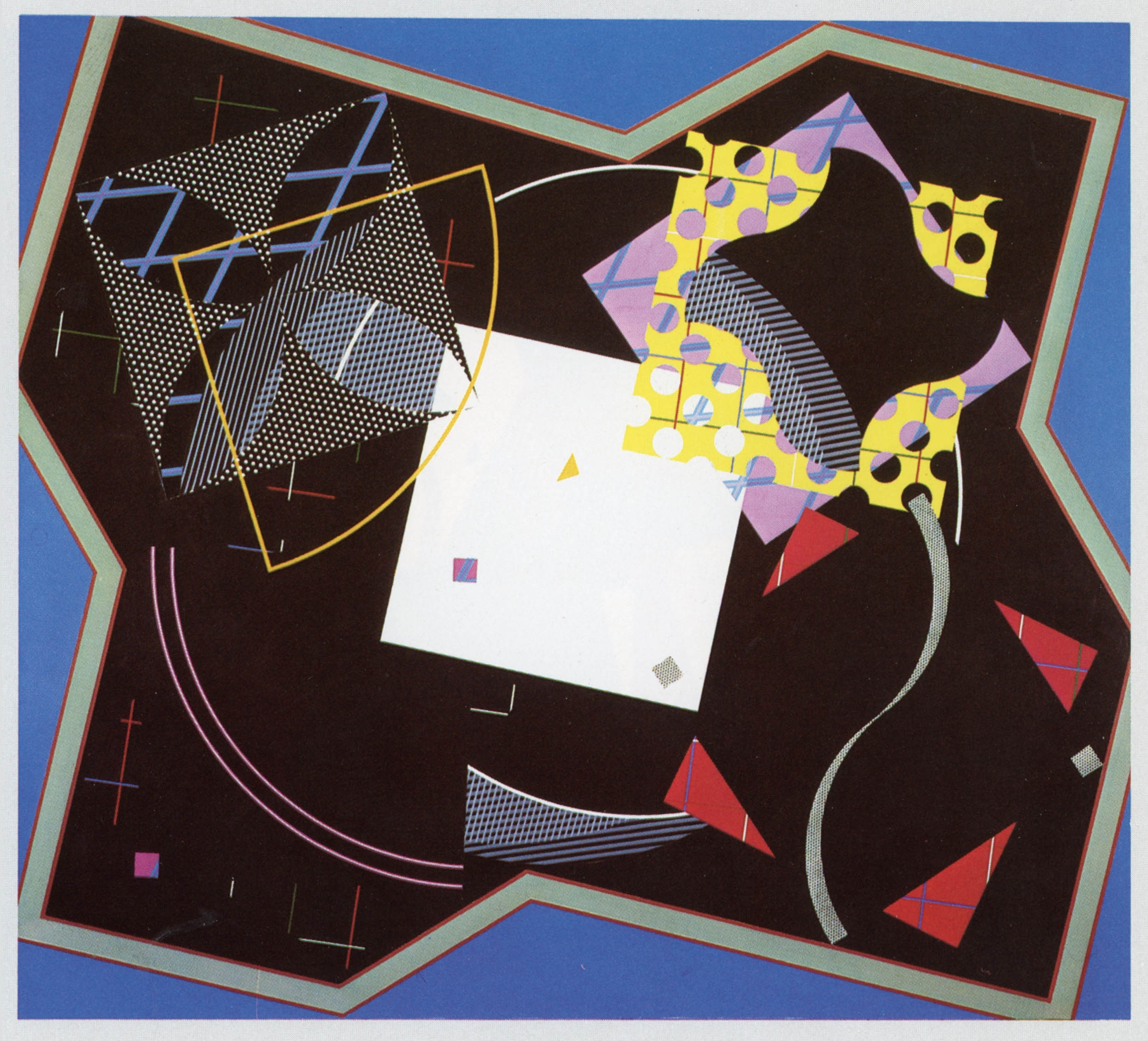
18 The Blues Brothers, Dave, 1979
acrylic on canvas
One of two panels 64 x 72″ (162.5 x 182.8 cm) each
Collection of American Telephone and Telegraph Company
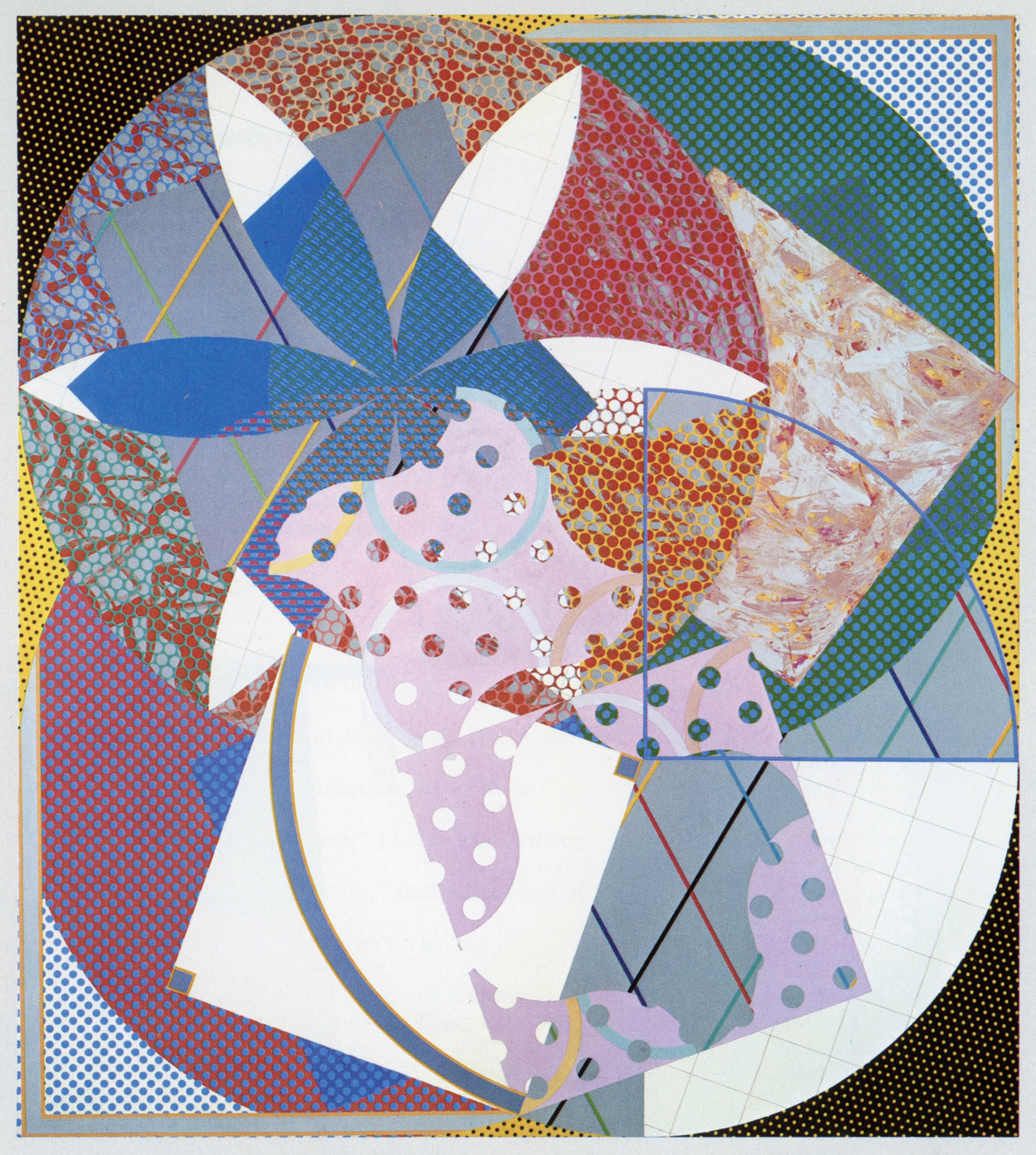
19 Red Shift Journey, 1980
acrylic on canvas
72 x 64″ (182.8 x 162.5 cm)
Courtesy Andre Emmerich Gallery, New York
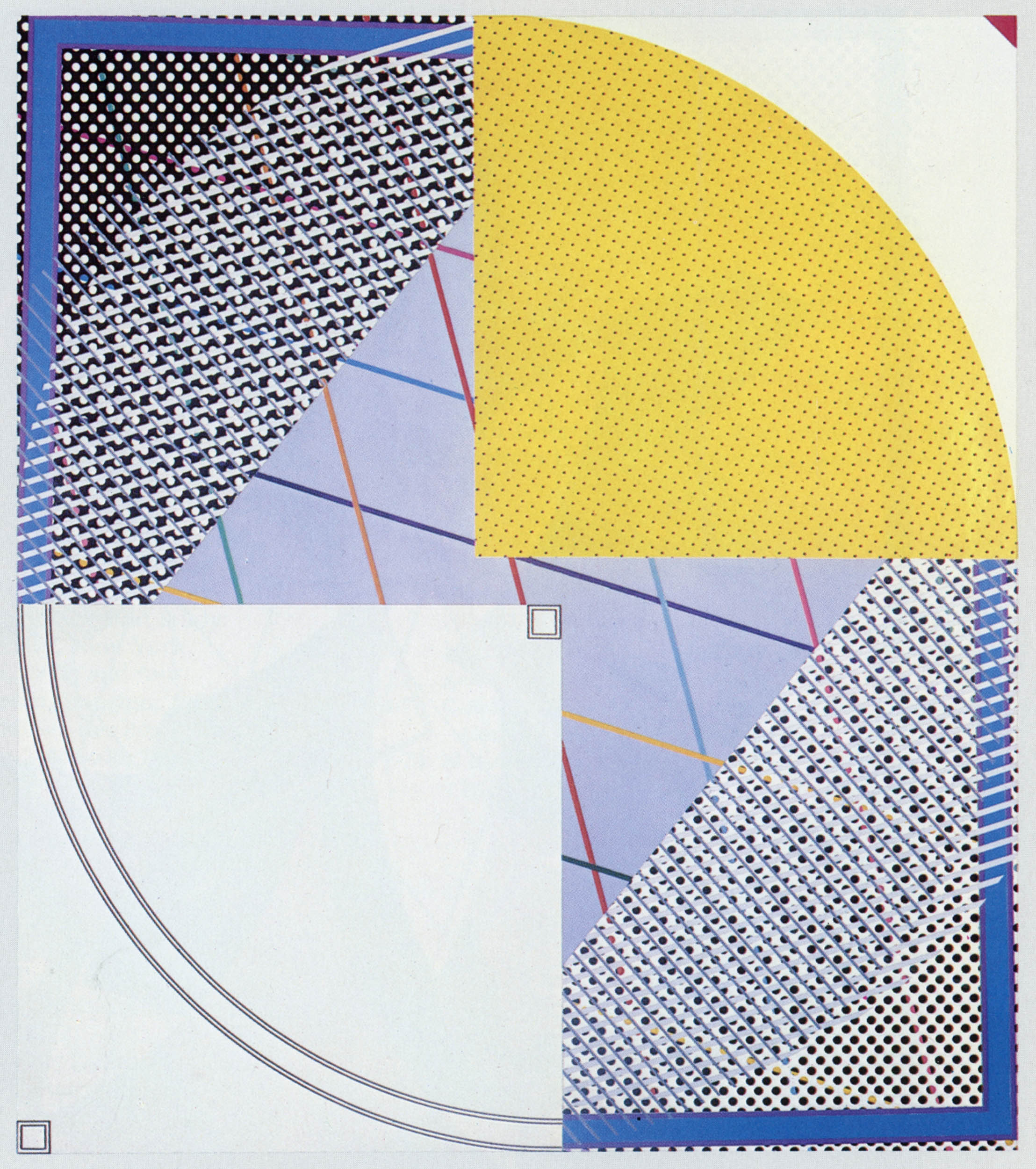
20 Constructavision, 1980
acrylic on canvas
44 x 50″ (111.7 x 127 cm)
Collection of Albright-Knox Art Gallery, Buffalo, New York · Edmund Hayes Fund 1981
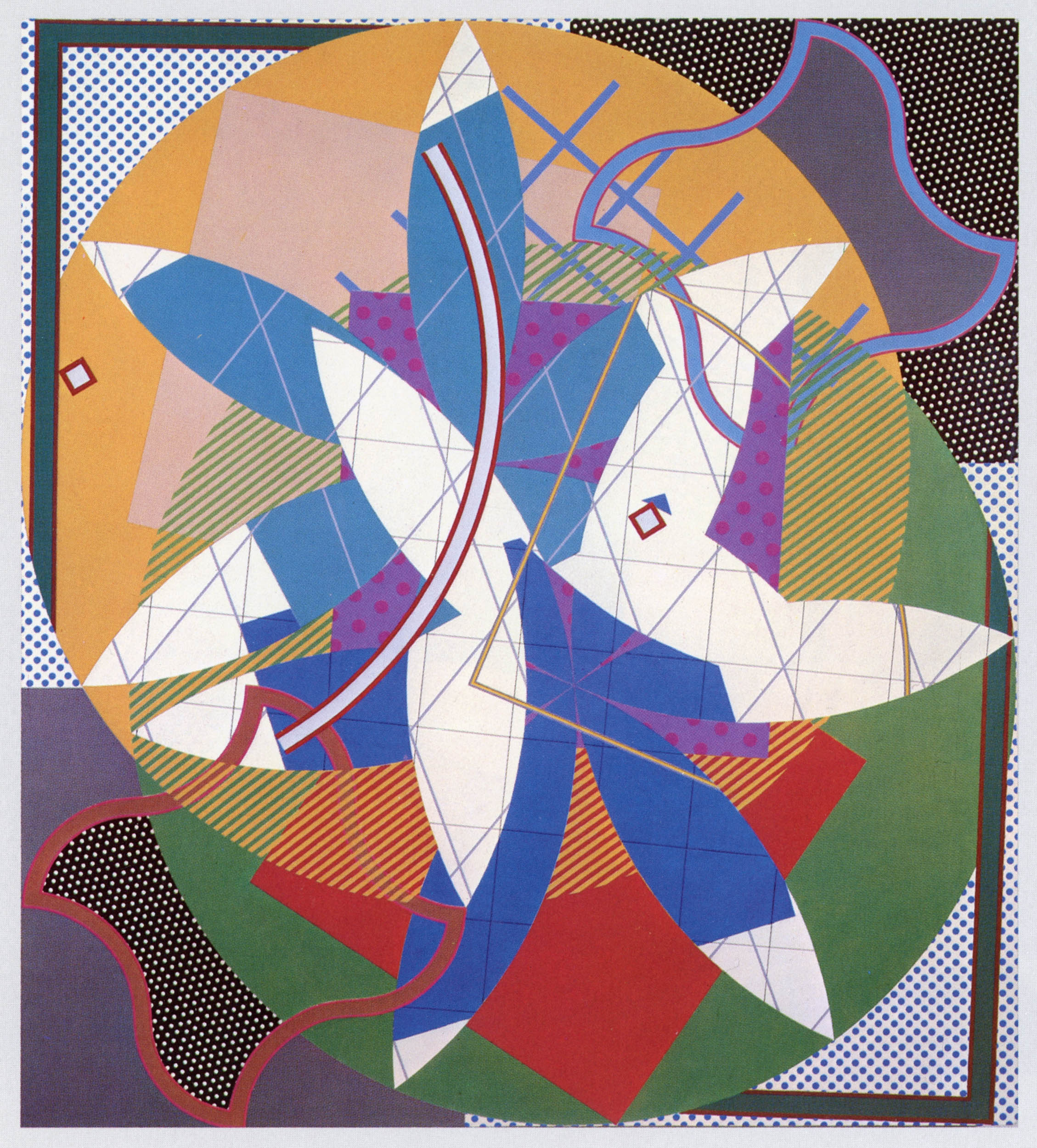
21 Sunset City, 1980
acrylic on canvas
60 x 54″ (152.4 x 137.1 cm)
Courtesy Andre Emmerich Gallery, New York
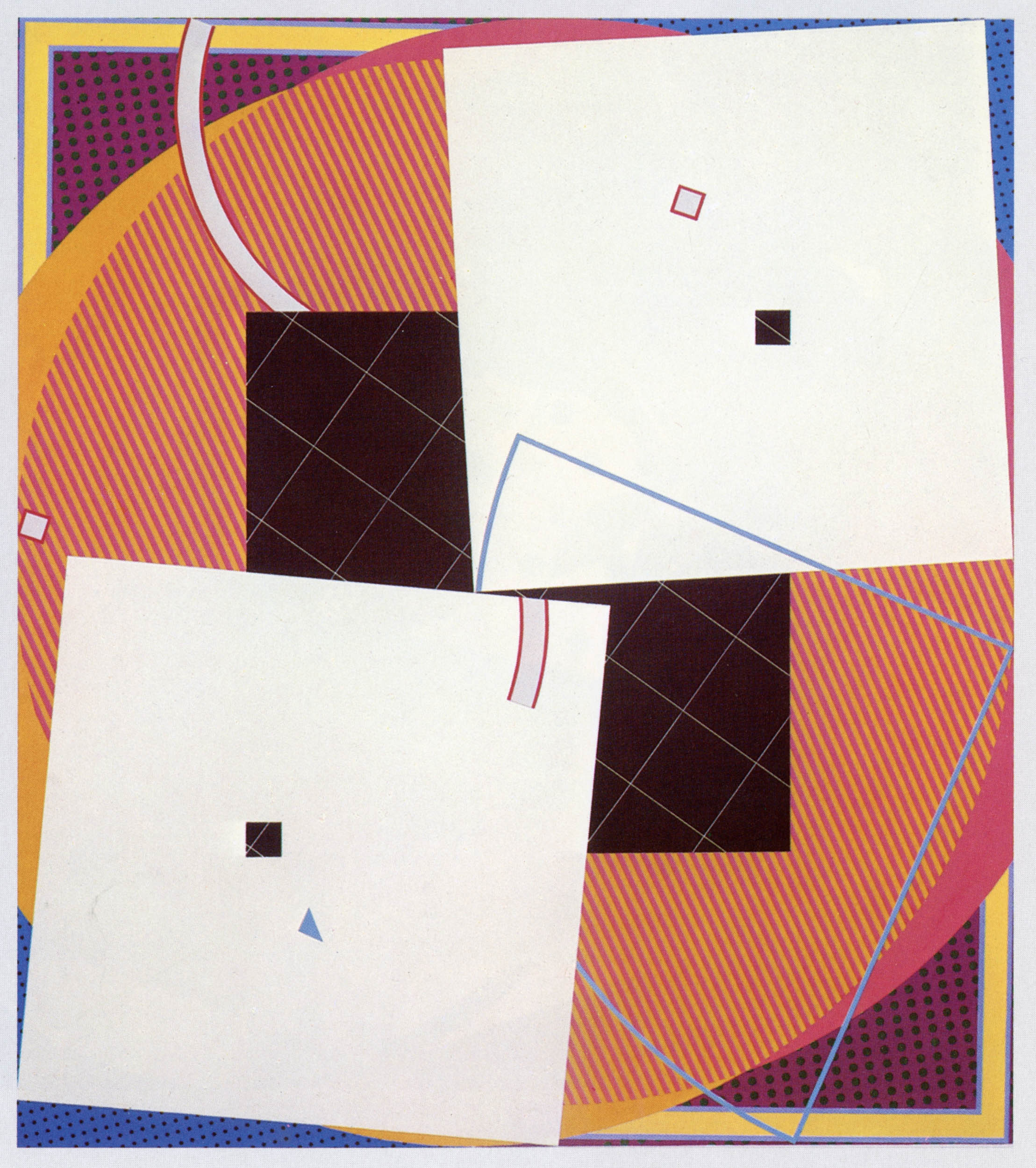
22 Columbus Circle, 1980-1981
acrylic on canvas
44 x 50″ (127 x 111.8 cm)
Courtesy Andre Emmerich Gallery, New York
William Conlon
Born in Albany, New York, 1941. Lives in New York City.
Education: School of Visual Arts, 1960-63; School of Art & Architecture, Yale University, BFA and MFA, 1965-67.
One Artist Exhibitions
1970 Reese Palley Gallery, New York
1972 Reese Palley Gallery, New York
1977 Andre Emmerich Gallery, New York
1980 Andre Emmerich Gallery, New York
1981 Andre Emmerich Gallery, New York; Museum of Art, Carnegie Institute, Pittsburgh: Twelve-year retrospective, October 24, 1981–January 3, 1982
Group Exhibitions
1964 Visual Arts Gallery, New York
1966 Yale University School of Art & Architecture, New Haven
1968 “Contemporary Art at Yale,” Yale University Art Gallery
1969 Silver Mine Guild Exhibition, Silver Mine, Connecticut
1970 “Six New York Painters,” J.L. Hudson Gallery, Detroit
1971 “Four New York Painters,” Dallas Museum of Fine Arts; Reese Palley Gallery, New York; Kunst Markt, Cologne; Duchamp Festival, University of California, Irvine; Hathorn Gallery, Skidmore College, Saratoga Springs, New York
1972 “Annual Exhibition of Contemporary American Painting,” Whitney Museum of American Art, New York; Reese Palley Gallery, San Francisco
1973 Maryland Institute of Art, Baltimore; “Faculty Show,” University of California, Irvine
1974 “Ten Painters in New York,” Michael Walls Gallery, New York
1975 Biennial Exhibition, Corcoran Gallery of Art, Washington, D.C.; John Doyle Gallery, Chicago; “Irvine Milieu—The First Ten Years,” La Jolla Museum of Contemporary Art, La Jolla, California; “CAPS Grant Recipients,” Michael C. Rockefeller Art Center Gallery, Fredonia, New York
1977 “The Critics’ Choice,” Lowe Art Gallery, Syracuse University; Munson-Williams-Proctor Institute, Utica, New York; “Ten Alumni from the School of Visual Arts,” Hundred Acres Gallery, New York; “Art in Public Spaces,” 26 Federal Plaza, New York; “Contemporary American Painting: Pattern, Grid and System Art,” Ralph Wilson Gallery, Lehigh University, Bethlehem, Pennsylvania
1978 “Six Artists View Development,” New York Academy of Sciences; “Key Works of the Season,” Andre Emmerich Gallery
1979 “Generation,” Susan Caldwell Gallery, New York; “American Painting: The Eighties, A Critical Interpretation,” Grey Art Gallery and Study Center, New York University, and international tour (1979–1983); “The New American Painting I,” Janie C. Lee Gallery, Houston
1980 “Subject: Space,” Pratt Institute Manhattan Center Gallery; “Drawings,” Nina Freudenheim Gallery, Buffalo; “Painting and Sculpture Today 1980,” Indianapolis Museum of Art; “American Drawings in Black and White from 1970-1980,” Brooklyn Museum
1981 “Twenty Artists from the Yale University Art School, 1950-1970,” Yale University Art Gallery, New Haven
Selected Public Collections
Dallas Museum of Fine Arts, Dallas, Texas; Everson Museum of Art, Syracuse, New York; Grand Rapids Art Museum, Grand Rapids, Michigan; The Brooklyn Museum, Brooklyn, New York; International Business Machines; Sherman & Sterling, New York; First National City Bank, Houston; Albright-Knox Art Gallery, Buffalo, New York
Teaching Experience
1967-70 School of Art & Architecture, Yale University, New Haven
1971-72 Hunter College, City University of New York
1972-75 University of California at Irvine
1975-79 Sarah Lawrence College, Bronxville, New York
1979– Fordham University at Lincoln Center, New York
Awards
1965 Graham Foundation of Fine Arts—group research grant in environmental studies
1969 Morse Fellowship, Yale University faculty grant—painting
1974-75 C.A.P.S., Creative Arts Projects, New York State Council on the Arts
1977-78 N.E.A., National Endowment for the Arts—highest award for painting
Bibliography
1970
Gollin, Jane. “Reviews and Previews: Conlon at Reese Palley,” Art News, December 1970, pp. 14-16.
Pincus-Witten, Robert. “New York,” Artforum, December 1970, p. 76.
Ratcliff, Carter. “New York Letter: Exhibition at Reese Palley,” Art International, December 1970, pp. 69-70.
1971
Robbin, Tony. “A Protean Sensibility,” Arts Magazine, May 1971, pp. 28-30.
Four New York Painters, Dallas Museum of Fine Arts, 1971; introduction by Robert Murdock.
Four Painters, Hathorn Gallery, Skidmore College, Saratoga Springs, New York, 1971; preface by George F. Kuebler.
1972
Ratcliff, Carter. “The Whitney Annual, Part I,” Artforum, April 1972, pp. 28-32.
Rose, Barbara. “Art: William Conlon,” New York Magazine, April 17, 1972, p. 89.
Contemporary American Painting 1972, Whitney Museum of American Art, New York, 1972; foreward by John I.H. Baur.
1975
34th Biennial of Contemporary American Painting, Corcoran Gallery of Art, Washington, D.C., 1975; introduction by Roy Slade.
1977
Lubell, Ellen. Review, School of Visual Arts, Arts Magazine, October 1977, p. 26.
Robbin, Tony. “The New Art of 4-Dimensional Space: Spatial Complexity in Recent New York Work,” Artscribe, November 1977.
1978
Meltzer, Herbert. “The Unexpected,” The Sciences (New York Academy of Sciences), March 1978.
Zimmer, William. Review, New York Academy of Sciences, Soho Weekly News, April 13, 1978.
1979
Russell, John. New York Times, February 9, 1979, p. C24.
Rose, Barbara. American Painting: The Eighties, A Critical Interpretation, exhibition catalogue, Grey Art Gallery and Study Center, New York University, New York, 1979.
Lubell, Ellen. Review, “Generation: Twenty Abstract Painters Born in the U.S. Between 1929 and 1946,” Soho Weekly News, February 22, 1979.
Perreault, John. Review, Grey Art Gallery, Soho Weekly News, September 27, 1979, p. 59.
Smith, Roberta. Review, “American Paintings: The Eighties,” Art in America, October 1979, pp. 122-23.
Tennant, Donna. “Technique Preoccupies Painters in Lee Gallery Show,” Houston Chronicle, October 12, 1979.
Tennant, Donna. “Art and the Critical Dilemma,” Houston Chronicle, October 28, 1979.
Foster, Hal. “A Tournament of Rose’s,” Artforum, November 1979, pp. 62-67.
1980
Perreault, John. Review, Pratt Manhattan Center, Soho Weekly News, January 24, 1980, p. 23.
Larson, Kay. Review, Pratt Manhattan Center, Village Voice, January 28, 1980, p. 72.
Schwartz, Ellen. Subject: Space, exhibition catalogue, Pratt Institute, Brooklyn and Manhattan, 1979.
Murry, Jesse. “William Conlon,” Arts Magazine, February 1980, p. 14.
Frank, Elizabeth. “William Conlon at Emmerich,” Art in America, April 1980, pp. 131-33.
Michel, Jacques. “Artistes Americains pour 1980,” Le Monde, April 23, 1980, p. 1.
Painting and Sculpture Today 1980, Indianapolis Museum of Art, 1980, plate 24.
Kramer, Hilton. Review, Brooklyn Museum, New York Times, November 28, 1980, p. C1.
1981
Murry, Jesse. “William Conlon’s ‘The Blues Brothers: Sam and Dave,’” Arts Magazine, January 1981, pp. 153-55.
Twenty Artists from the Yale University Art School, 1950-1970, Yale University Art Gallery, New Haven, 1981; essay by Irving Sandler.
Caldwell, John. “Works by Alumni Bring Luster to Yale,” New York Times, February 8, 1981.
Raynor, Vivien. Review, Emmerich, New York Times, April 3, 1981.
Copyright © 1981 by the Museum of Art, Carnegie Institute. Published for the exhibition William Conlon: Paintings 1969-1981 at the Museum of Art, Carnegie Institute, Pittsburgh, Pennsylvania, October 24, 1981 – January 3, 1982. ISBN 0-88039-001-8. Printed in the United States of America.